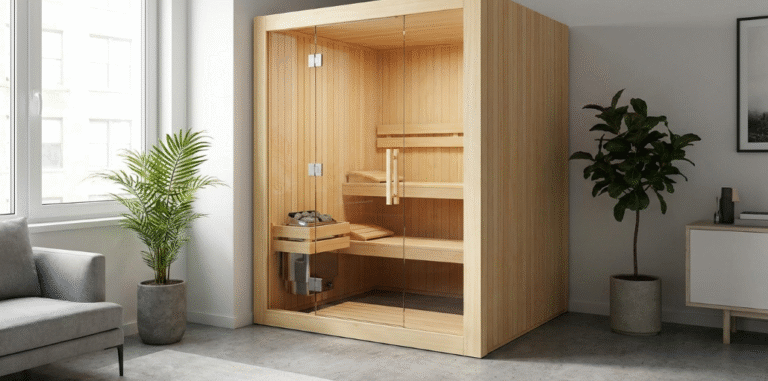
A small traditional electric sauna for two or three people typically runs $3,000 to $6,000 installed, needs a dedicated 220 to 240V circuit, and heats the air to 170 to 190 degrees Fahrenheit over 30 to 45 minutes. A comparable small infrared unit costs $1,800 to $3,500, plugs into a standard 120V outlet with no electrician required, and is ready to use in 10 to 15 minutes at a lower 120 to 140 degree range. The lower cost and simpler install make infrared the more common starting point for a first small sauna, while traditional remains the closer match to the heat exposure used in most of the cardiovascular research.
What Does a Small Traditional Sauna Actually Cost?
The unit itself, a two or three person cedar or hemlock cabin with an electric heater sized around 4.5 to 6 kW for that volume, generally runs $2,500 to $5,000 depending on wood species and heater quality. Add electrical work for the required 220 to 240V dedicated circuit, commonly $200 to $600 for an electrician depending on how far the panel is from the install site, and total project cost for a small traditional unit typically lands between $3,000 and $6,000. Ongoing costs include heater rocks every one to two years, around $30 to $60 a set, and electricity, since a 6kW heater running 30 to 45 minutes several times a week adds a noticeable but modest amount to a monthly utility bill.
What Does a Small Infrared Sauna Actually Cost?
A comparable two or three person infrared cabin, built around carbon or ceramic heating panels rather than a stone-and-air heater, typically costs $1,800 to $3,500 fully assembled. Because most small infrared units run on a standard 120V outlet, there is usually no electrician bill at all, which is the single biggest cost gap between the two categories on the installation side. Operating cost also tends to run lower, since infrared panels draw less total wattage than a traditional heater working to raise an entire cabin’s air temperature, and there are no heater rocks to replace, only occasional panel checks that add close to nothing to the annual maintenance budget.
How Do the Two Compare on Total Cost Over Five Years?
Factoring in the unit, installation, and five years of routine maintenance and electricity, a small traditional sauna commonly totals somewhere around $3,500 to $7,000, while a small infrared unit lands closer to $2,000 to $4,200 over the same period. The gap narrows somewhat if a household already has adequate 220V wiring nearby, which removes the traditional unit’s biggest install cost disadvantage, but infrared still generally comes out as the lower-cost path for a first-time buyer working with standard household electrical service.
Does the Cost Difference Reflect a Difference in Experience?
Traditional saunas heat the surrounding air, which then heats the body through convection and radiant heat off hot stones, producing the higher-temperature, higher-humidity-capable experience associated with the classic sauna feel, including the option to add steam by pouring water on the rocks. Infrared panels heat the body more directly at a lower ambient air temperature, which many users find more tolerable for longer sessions and easier to adjust to, but it is a genuinely different sensory experience rather than a lower-powered version of the same one. Neither is objectively better; the choice comes down to whether the higher heat and steam option matters to you or whether a gentler, faster-to-heat session is the priority. Buyers weighing both formats side by side in a small footprint can look at current pricing and configurations from a specialty retailer such as Sweat Decks before deciding which build fits the budget and the space.
Which Type Matches the Research Most Closely?
The bulk of the cardiovascular cohort research, including the long-running Finnish studies most often cited for sauna’s health associations, was conducted using traditional hot-air saunas, not infrared units. A 2018 systematic review in Evidence-Based Complementary and Alternative Medicine and a 2001 review in The American Journal of Medicine both summarized findings drawn from traditional sauna exposure specifically. A 2023 review in Mayo Clinic Proceedings looking at sauna bathing alongside other lifestyle factors similarly draws on the traditional-sauna cohort tradition. That does not mean infrared offers nothing, but it does mean anyone choosing infrared specifically to chase the outcomes described in that body of research is applying findings from a different heating method than the one actually studied, an honest distinction worth knowing before buying. None of this means infrared is a lesser product, plenty of users prefer its lower operating temperature and faster access, only that anyone specifically shopping for the outcomes described in the Mayo Clinic Proceedings and American Journal of Medicine literature should know that research is grounded in the hotter, air-heated format rather than panel-based heating.
How Do Footprint and Warm-Up Habits Differ Day to Day?
A small traditional unit’s longer 30 to 45 minute warm-up means it works best for people who can start the heater before dinner or before an evening routine and let it come up to temperature while doing something else nearby. An infrared cabin’s 10 to 15 minute warm-up fits more spontaneous use, since there is less dead time between deciding to use it and actually stepping in. Neither difference affects the physical footprint much, both formats are available in similar 4×4 to 5×6 foot small-cabin sizes, but the warm-up gap does change how a unit fits into a typical evening, and it is worth thinking through honestly rather than assuming faster is simply better across the board. Some owners specifically like the traditional unit’s slower ramp-up as a built-in wind-down period before the session even starts.
Which Should You Actually Choose?
If budget and a simple plug-in install matter most, or the household is not set up for a 220V circuit without added electrical work, infrared is the more practical small-sauna starting point. If matching the traditional Finnish sauna experience, including the option for higher heat and steam, and staying closest to the setup most cardiovascular research was based on matters more than upfront cost, a small traditional electric unit is worth the higher price and the electrician visit. Both, sized correctly for a two or three person footprint, fit comfortably in a garage, basement corner, or small backyard.
Frequently Asked Questions
Is a small traditional sauna or infrared sauna cheaper overall? Infrared is usually cheaper, often $1,800 to $3,500 versus $3,000 to $6,000 for traditional, and it avoids the cost of a dedicated 220V circuit.
Does a small infrared sauna need special electrical work? Most plug into a standard 120V outlet with no electrician needed, unlike traditional heaters, which typically need a dedicated 220 to 240V circuit.
Which type of small sauna heats up faster? Infrared units are typically ready in 10 to 15 minutes. Traditional saunas take 30 to 45 minutes to reach their higher target temperature.
Which type of small sauna matches the cardiovascular research? Traditional hot-air saunas, since the largest long-term cohort studies were conducted using that heating method rather than infrared.
References
- Clinical Effects of Regular Dry Sauna Bathing: A Systematic Review, Evidence-Based Complementary and Alternative Medicine, 2018
- Benefits and risks of sauna bathing, The American Journal of Medicine, 2001
- Does the Combination of Finnish Sauna Bathing and Other Lifestyle Factors Confer Additional Health Benefits? A Review of the Evidence, Mayo Clinic Proceedings, 2023
By Patricia Nguyen